Table of Contents
- 1Quick Answer: Do You Need a Permit for a Fence?
- 2When a Fence Permit Is Typically Required
- 3When You Usually Don't Need a Permit
- 4Typical Fence Permit Requirements
- 5How to Get a Fence Permit: Step-by-Step
- 6Property Lines and Good-Neighbor Basics
- 7What a Fence Permit Costs in 2026
- 8What Happens If You Build Without a Permit?
- 9How Long Does Fence Permit Approval Take?
Quick Answer: Do You Need a Permit for a Fence?
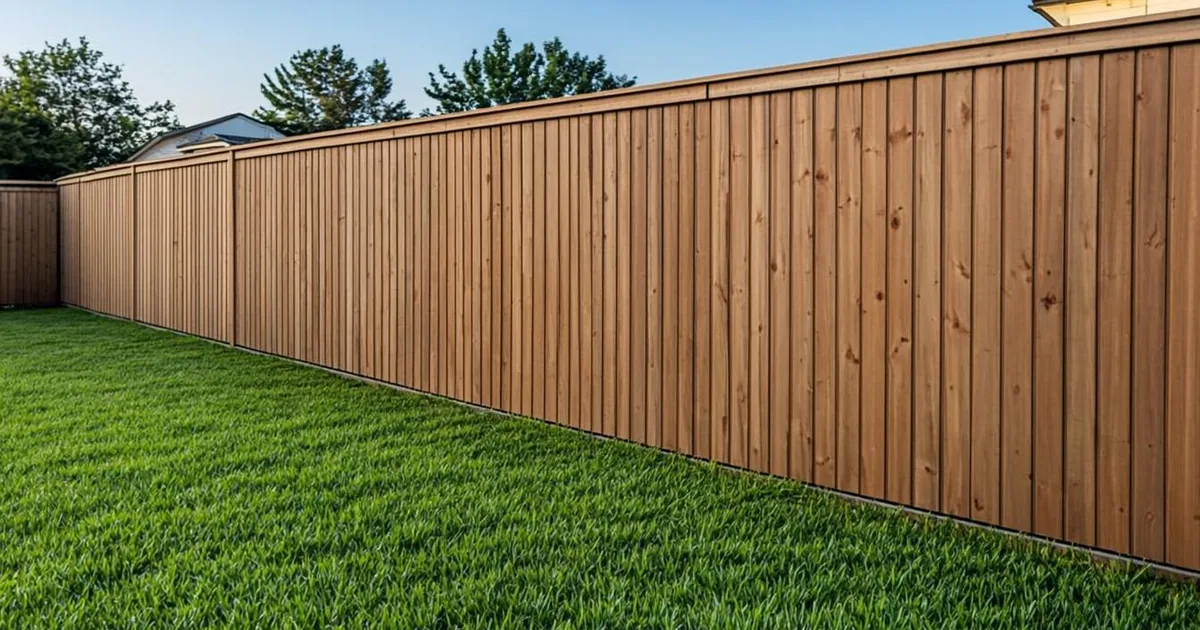
In most U.S. cities, no — a standard residential fence does not need a building permit. The International Residential Code (IRC), which most states and cities adopt, exempts fences up to 7 feet (2,134 mm) high from permits. A typical 4-foot yard fence or 6-foot privacy fence sits safely under that line.
But the 7-foot exemption is not a free pass. You need a permit — or at least formal approval — when your fence crosses one of these lines:
- Height: anything over 7 feet, including fences built on top of retaining walls.
- Pool enclosures: every fence that serves as a pool barrier needs a permit and must meet the 48-inch barrier code.
- Front yards and corner lots: many cities cap front-yard fences at 3–4 feet or ban solid fences in visibility triangles near driveways and intersections.
- Masonry and retaining walls: walls over 4 feet — measured from the bottom of the footing — need engineered plans and a permit.
- Historic districts: design review approval comes before any permit.
Every city amends these rules in its own way, and amendments change regularly. Always confirm with your local building department before digging — or let Home Permit Pro check your city's rules and file for you.
When a Fence Permit Is Typically Required
Fences over 7 feet tall. Section R105.2 of the IRC lists "fences not over 7 feet (2,134 mm) high" as work exempt from permits — here is that exemption in a county code handout. Anything taller gets treated like a structure: expect a permit application with height, material, and structural details, and some cities cap residential fences lower than the IRC line, so the 7-foot rule is a ceiling, not a guarantee.
Pool enclosures. A fence that guards a residential pool is regulated as a barrier, not just a fence. Codes require the barrier to be at least 48 inches above grade on the side facing away from the pool, with self-closing, self-latching gates — Pima County, AZ publishes the exact standard. Barrier installation almost always needs a permit and an inspection, because a non-compliant barrier is a child-safety issue.
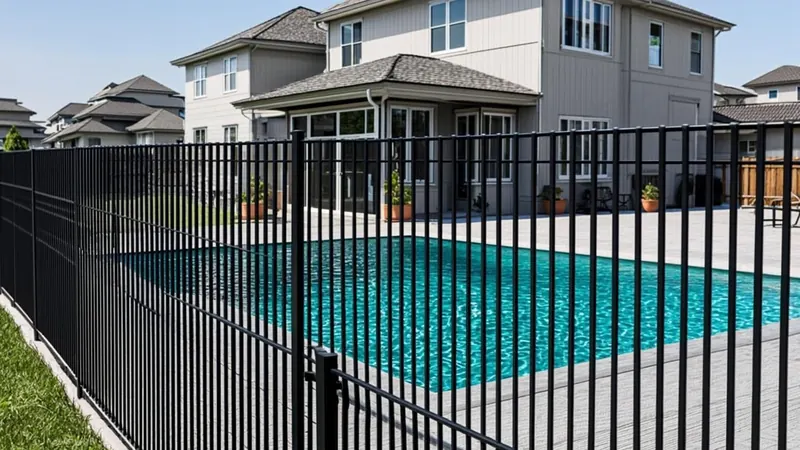
Front-yard and corner-lot fences. Even when height is fine, front setbacks and visibility triangles are restricted. Solid fences can block the sight line between a driveway and the street, so many cities limit front-yard fences to 3–4 feet or require open styles like picket or wrought iron. Corner lots add a second visibility triangle for the cross street.
Retaining and masonry walls. A fence on top of a retaining wall counts toward the wall's effective height, and walls over 4 feet from the bottom of the footing need engineered plans and a permit. Brick, stone, and block walls usually need one regardless of height because of their weight and footing requirements.
Historic districts. If your home is in a designated historic district, the preservation board usually reviews fence style, material, and color before the building department will accept a permit application. Budget a few extra weeks for that review.
When You Usually Don't Need a Permit
You generally do not need a permit for a fence that is all of the following: under 7 feet tall, outside the front setback, not enclosing a pool, and not part of a retaining or masonry wall. That covers the classic suburban projects — a 4-foot picket fence in the side yard, a 6-foot cedar privacy fence along the back lot line.
Replacement work is often lighter too. Like-for-like repairs and swapping panels or posts in the same footprint are exempt in many cities, though a full rebuild with new height, material, or location restarts the permit question.
Two things that still apply with no permit: easements and HOAs. A fence in a utility easement can be ordered out at your cost for line work, and a homeowners association can require architectural approval even where the city doesn't — HOA approval is not a permit, but skipping it can mean lawsuits or forced removal.
Florida added a statewide change for 2026 worth knowing: under HB 803, effective July 1, 2026, local governments can no longer require a building permit for residential construction valued at $7,500 or less that involves no structural work — a threshold most everyday residential fence jobs fall under (Florida Senate). The exemption trims paperwork, not safety rules: zoning approvals, flood-zone requirements, and pool-barrier permits still apply, and fences above the value threshold need permits as before.
The same footprint logic follows other backyard structures — our guide to whether a shed needs a permit covers the size thresholds that decide most storage-building projects.
Typical Fence Permit Requirements
When a permit is required, the application is usually simple. Cities typically ask for:
- A site plan showing property lines, the proposed fence footprint, and distances to lot lines and structures.
- Height and material specs — a 6-foot cedar privacy fence is described differently than a 4-foot chain-link, and some cities restrict certain materials in front yards.
- A survey in some cases — usually only when the fence sits close to a lot line or easement.
- Contractor or homeowner info and the permit fee at filing.
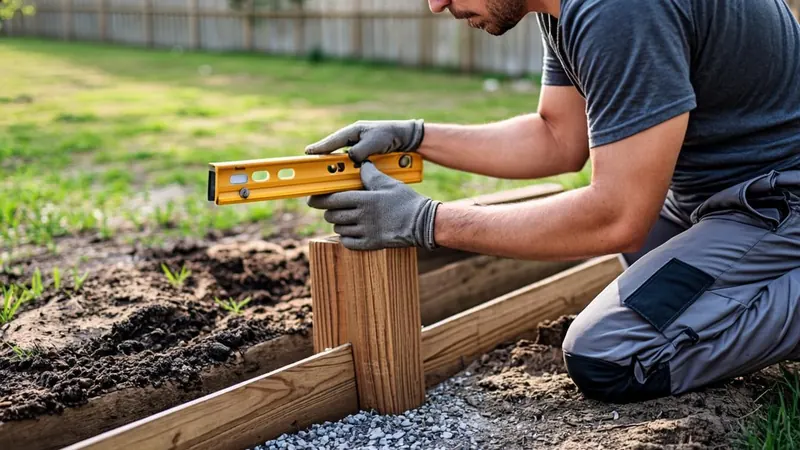
One requirement applies to every fence project, permitted or not: call 811 before you dig. The utility locate service is free, it is required in most states, and it marks gas, electric, and water lines so you don't strike one while digging post holes.
How to Get a Fence Permit: Step-by-Step
Fence permits are among the simplest approvals in residential construction, and most of the work happens before you file. Here is the process that plays out in city after city:
- Confirm your city's fence rules. Search the building or community development department's website for "fence permit" — you'll find the height table, setback rules, and whether your project is exempt. Five minutes here prevents the most common mistakes.
- Draw a simple site plan. Show property lines, the fence footprint, distances to lot lines, and gate positions. A marked-up plat or a clean hand sketch with measurements is enough in most cities.
- File the application and pay the fee. Online portals or the counter — residential fence fees typically run $25 to $150, with the exact figures in the table below. Have your contractor's license number handy if you're using one.
- Wait out a short review. Simple fence permits are often approved over the counter; the rest usually clear in one to two weeks. Comments normally ask for missing measurements, not redesigns.
- Call 811 before digging. The free utility locate is legally required in most states, it is separate from your permit, and its marks expire after a limited window — so schedule it close to your start date.
- Build to the approved plan and close it out. Pool barriers and some masonry walls need a final inspection; ordinary fences often don't. Keep the permit card posted until any required sign-off is done.
Property Lines and Good-Neighbor Basics
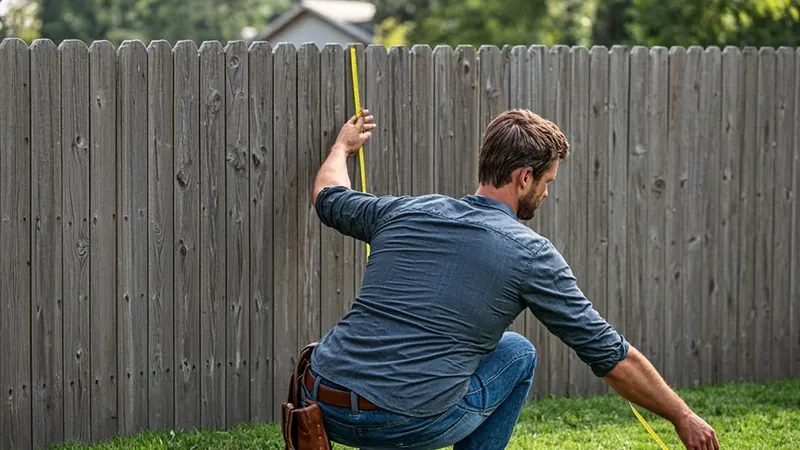
The permit answers one question; the property line answers another. Most cities let you build a side- or rear-yard fence directly on the lot line, but "close enough" is not a measurement. Fences that drift a foot over the line are among the most common neighbor disputes, and moving a finished fence is far more expensive than moving stakes before the concrete arrives.
Two habits prevent nearly all of it. First, rely on a recorded survey — or hire a licensed surveyor if the old stakes are gone — rather than trusting where a predecessor's fence happens to stand. Second, if the fence sits on or near the line, get the neighbor's sign-off in writing; a one-page agreement avoids "that's my fence" claims later, and some cities require the adjoining owner's consent for line fences.
While you're at it, check whether a utility easement crosses the line — a fence that a water department can order removed at your cost is an expensive decoration.
What a Fence Permit Costs in 2026
Residential fence permits are among the cheapest building permits a city issues. Most homeowners pay somewhere between $25 and $150. Here is what actual cities charged on their current published fee schedules:
| City / County | Residential fence permit fee |
|---|---|
| Inver Grove Heights, MN | $25 |
| Denison, TX | $50 |
| DuPage County, IL | $60 |
| Houston, TX | $73.85 for the first 100 linear feet |
| San Marcos, TX | $79 |
✅ Rule of thumb: if the fence protects a pool, tops 7 feet, or faces a street, assume a permit is required and budget for it. A permit costs less than removing a fence the city has ordered down.
Some cities charge per linear foot instead of a flat fee, and a few calculate from project valuation like other construction permits. If a re-inspection is needed after a failed check, expect a small re-inspection fee too. And while fence fees are small, the bigger numbers arrive when a backyard project also needs permits for a deck, patio, or shed — our building permit costs by state guide puts real numbers on those.
What Happens If You Build Without a Permit?
Skipping a required permit is cheap until it isn't. Cities can issue a stop-work notice mid-project, fine you daily until the paperwork is fixed, and in serious cases order the fence removed at your expense. We cover the full chain of consequences in our guide to what happens if you build without a permit.
The fines are real, not theoretical. New York City charges $600 per violation for unpermitted work at one- and two-family homes under its rules on investigations after the fact (NYC Rules § 102-04), and Apache Junction, Arizona adds an investigation fee of $250 to $2,500 on top of the permit cost when unpermitted work is discovered (city code § 4-3-1). Daily fines, stop-work orders, and forced removal stack on top of what the permit would have cost in the first place.
The longer-term costs show up at the worst time. Unpermitted structures surface during sale or refinance disclosures, and buyers' lenders can raise objections. An unpermitted pool barrier is worse still — if a child gets into the pool area, the code violation becomes evidence in a liability claim.
How Long Does Fence Permit Approval Take?
Simple residential fence permits are often issued over the counter or within one to two weeks — the review is mostly a setback and height check against your site plan. Applications get delayed when the site plan is missing measurements, the fence abuts a lot line, or the project touches an easement. Pool barriers and historic-district reviews add inspection and board time.
Curious how that compares to bigger projects? Our guide to how long it takes to get a building permit breaks down typical timelines by project type and city size.
When in doubt, file — or let Home Permit Pro check your city's rules and file for you.